Interview 5 – Head of the Tanneries Chouara
Can you tell me about your background?
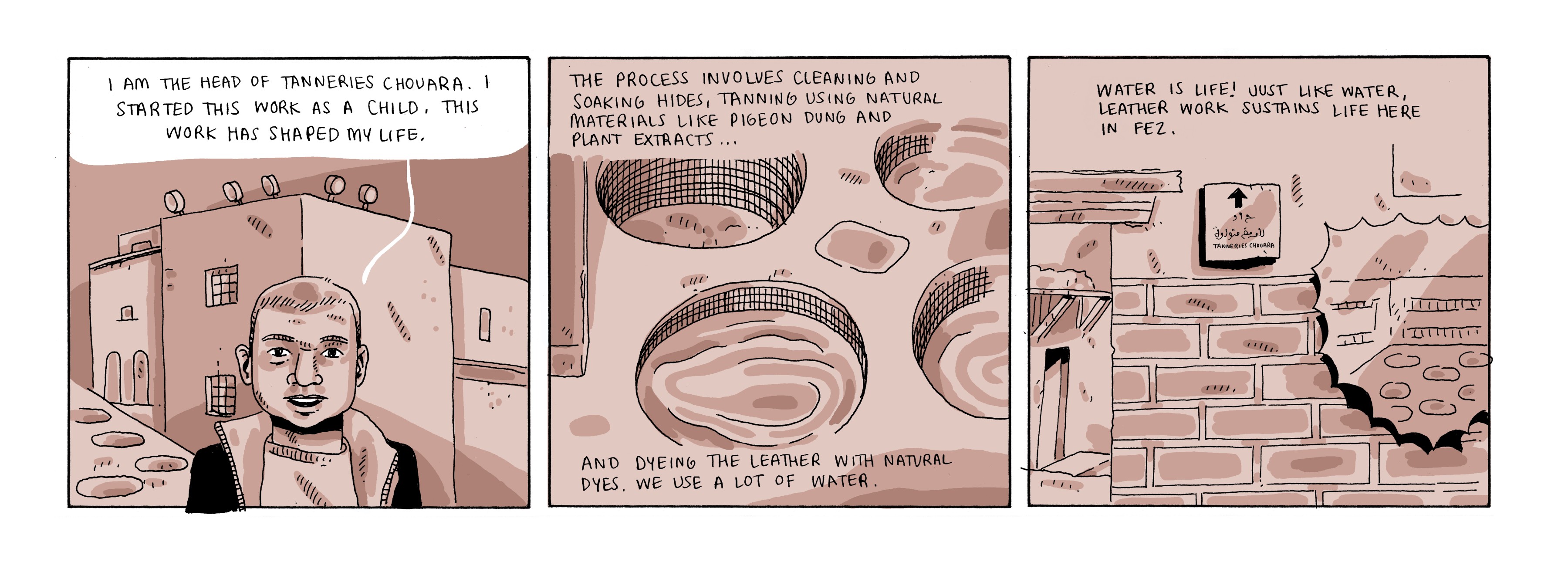
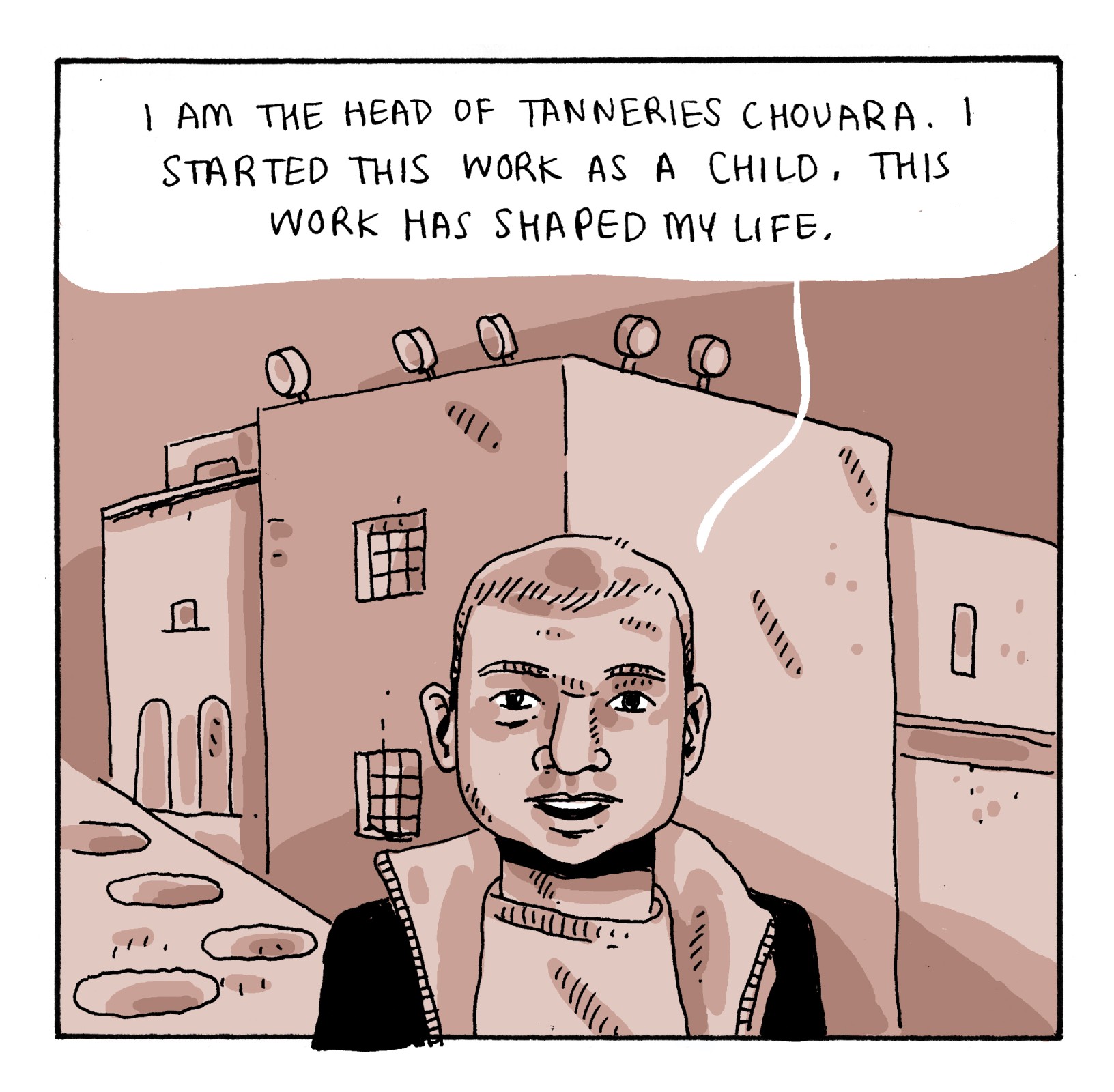
My name is Khalid Chaouiki, i’m 34 years old and from Fez. I didn’t want to study as a child, so my father brought me here to work at the tannery. I started as a child. My father guided me here, and I learned by doing. You will work and learn in the tannery. This work has shaped my life. Even though leather is no longer as profitable, it gives me a way to provide for my family. Back then, leather was more prestigious.
Step by step, I became experienced and eventually responsible for the tannery
Back then, there was work, and it paid well. I started coming at 6 in the morning, and I’ve been working here for 34 years. Today, I’m the head of this tannery. We were 540 workers, now 120. This place is almost a thousand years old, or more
Can you tell me about your job?
I learned the trade while growing up. I helped at home and in the tannery as a child. Over time, I learned all the steps, from preparing the hides to the finishing processes
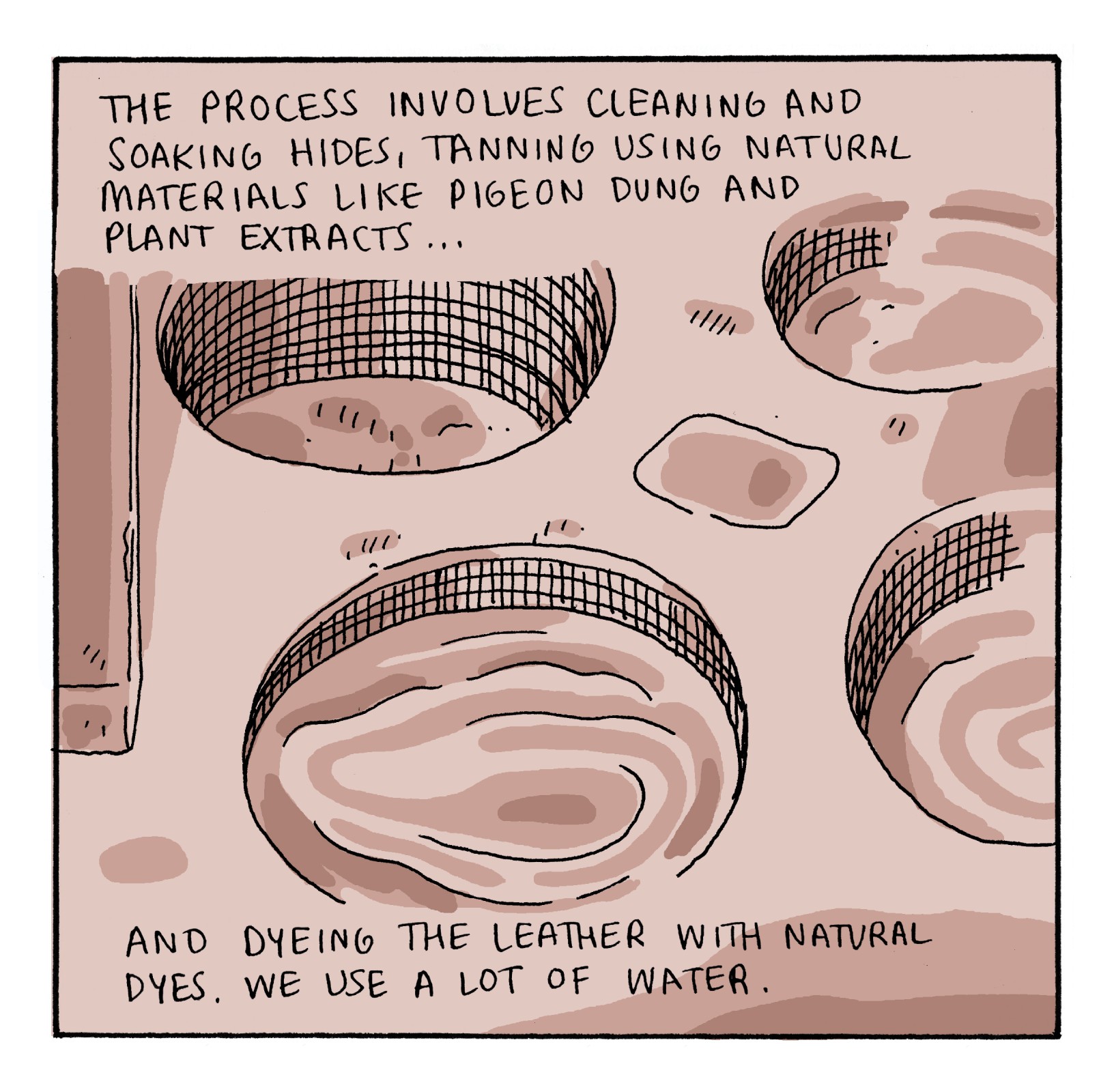
The process involves:
Cleaning and soaking hides – removing hair, fat and impurities.
Tanning – using natural materials (like pigeon dung, plant extracts) to preserve and soften leather.
Dyeing – colouring hides with natural dyes.
Drying and finishing – stretching, softening, and preparing leather for sale.
The tannery is our life. It used to be a respected profession and provided a good income. Now it’s harder, but it still allows us to survive. We work to fight poverty and even though the craft is less in demand today, it’s our heritage and our family’s livelihood. But I wouldn’t like my son to work in here, his legs won’t last in here, and it’s not as it was. At the time, religious celebrations took place in here, and it was a place full of work
What are the main concerns about your job?
It is physically demanding and historically well paid and respected, but today the work pays less due to decreased leather demand
It remains a family-inherited craft, a livelihood, and a fight against poverty
Life is difficult. We struggle every day to earn enough. Even though the trade is no longer profitable like before, it is what allows us to survive. We keep going to provide for our families and maintain our livelihood
Is a formalised job in the agriculture sector an option in Morocco?
I tried to work elsewhere, but there was nothing else. Agriculture is too physically demanding and pays very little. The tannery was the only option where I could earn a living
There are no real opportunities. Even if I wanted to, agricultural work is very hard and poorly paid. I have no choice but to continue here
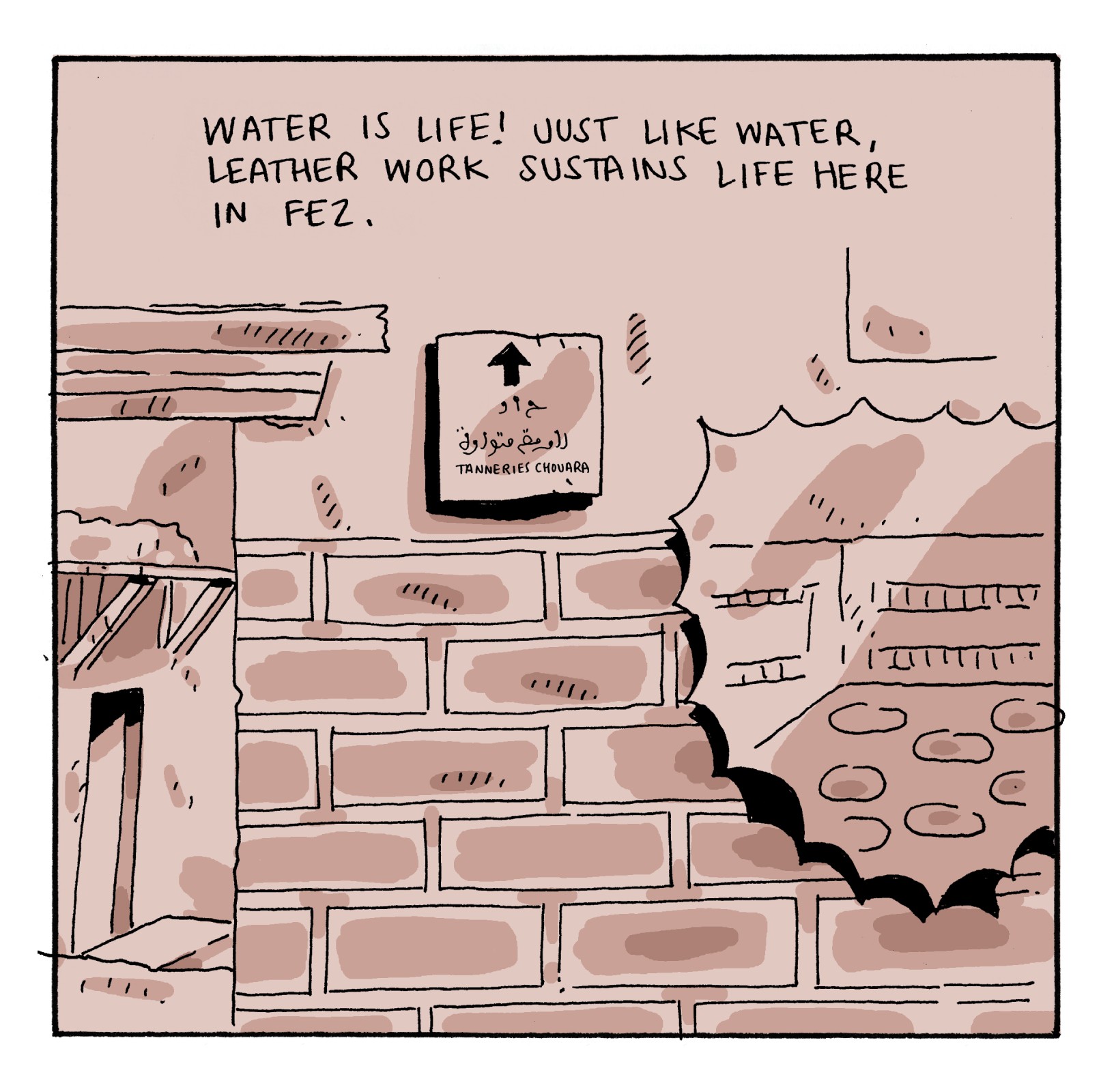
Water is life. And in the Quran, it is said that from water, all living things are created. Just like water, leather work sustains life here in Fez
How much do you earn?
In the past, the work was respected and you could earn 200–250 dirhams per day easily